Eyeglass Selection Guide: Frames, Lenses & Expert Tips
Choosing the right eyeglasses requires balancing three factors: an accurate clinical prescription, a frame that complements your specific face shape, and lens technology—like high-index materials or anti-reflective coatings—tailored to your daily environment. At Poudre Valley Eyecare, we’ve spent 25 years helping Fort Collins families navigate these choices to find eyewear that provides both crystal-clear vision and long-term comfort.
Understanding Your Vision Needs: The Foundation of Smart Eyeglass Selection
Comprehensive Eye Examination: Your Starting Point
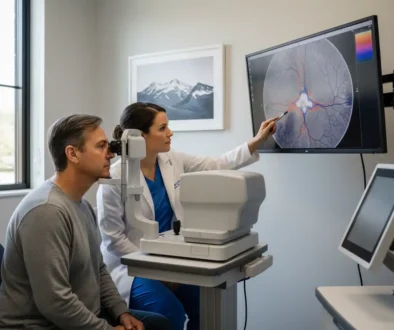
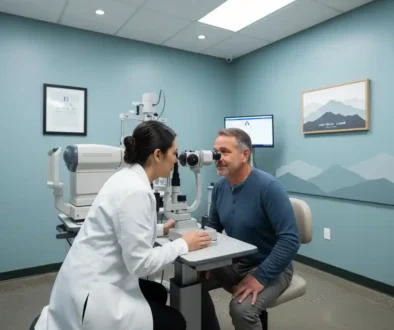
Before exploring frame styles or lens options, a thorough eye examination provides the essential foundation for choosing the right eyeglasses. Recent studies from the American Optometric Association confirm that comprehensive eye exams can detect over 270 serious health conditions¹, making this step crucial for both vision correction and overall health monitoring.
During your comprehensive examination, we evaluate:
- Visual acuity testing to determine your exact prescription requirements
- Binocular vision assessment to ensure comfortable, coordinated eye movement
- Retinal health evaluation using advanced imaging technology
- Eye pressure measurement to screen for glaucoma risk
- Digital eye strain assessment to identify computer-related vision issues
Schedule Your Comprehensive Eye Exam in Fort Collins
Prescription Types: Single Vision, Bifocal, and Progressive Options
Single Vision Lenses remain the most common prescription type, correcting vision at one distance—either near, intermediate, or far. These lenses provide consistent correction across the entire lens surface, making them ideal for patients under 40 or those with specific distance-related vision needs.
Bifocal Lenses address two distinct vision zones through separate prescription areas. Traditional bifocals feature a visible line separating distance vision (upper portion) and reading vision (lower segment). While cost-effective and reliable, some patients experience “image jump” when transitioning between zones.
Progressive Lenses represent the pinnacle of multifocal technology, providing seamless vision correction from distance to intermediate to near vision without visible lines. These advanced lenses eliminate image jump while maintaining natural visual transitions, though they require a brief adaptation period.
Recent research indicates that progressive lens satisfaction varies by study methodology and population, with rates ranging from 84% to 97% depending on fitting techniques and patient characteristics. Studies using advanced foveal fixation axis measurements show particularly high success rates, making proper professional fitting crucial for presbyopic patients seeking optimal visual comfort.
Frame Selection: Balancing Style, Comfort, and Functionality
Face Shape Analysis for Optimal Frame Selection
Understanding your face shape provides valuable guidance for choosing the right eyeglasses that enhance your natural features while ensuring a comfortable fit.
Round Faces benefit from angular frames that add definition and structure. Rectangular or square frames create balance, while frames wider than your face’s broadest point prevent a crowded appearance.
Square Faces are complemented by curved or round frames that soften strong jawlines. Oval shapes and frames with gentle curves balance angular features effectively.
Oval Faces have the advantage of suiting most frame styles. However, frames that match your face width and maintain proportion typically provide the most flattering appearance.
Heart-Shaped Faces work well with frames that add width to the lower portion. Cat-eye styles or frames with decorative lower elements help balance a wider forehead with a narrower chin.
Diamond Faces are enhanced by oval or rimless frames that complement high cheekbones without adding unnecessary width.

Frame Materials: Durability Meets Comfort
Metal Frames offer lightweight durability with professional aesthetics. Titanium provides an exceptional strength-to-weight ratio, while stainless steel delivers reliable performance at accessible price points. Memory metal frames resist deformation and maintain their shape over time.
Plastic and Acetate Frames enable bold colors and patterns while providing excellent stability. High-quality acetate frames offer hypoallergenic properties and can be easily adjusted for optimal fit.
Hybrid Materials combine the best of both worlds, featuring metal hinges with plastic or acetate frame fronts for enhanced durability and style versatility.
Frame Fit: The Technical Aspects of Comfort
Proper frame fit directly impacts both visual performance and long-term comfort. Key measurements include:
Lens Width should position your pupils centrally within each lens. Typical measurements range from 44-62mm, with proper positioning preventing edge distortion and maximizing your field of view.
Bridge Size determines how the frame sits on your nose. Measurements between 16-22mm ensure stable positioning without pressure points or sliding.
Temple Length affects how securely frames rest on your ears. Most adults require temple lengths between 135-150mm for optimal comfort and stability.
Advanced Lens Technology: Enhancing Visual Performance
High-Index Lens Materials: Reducing Thickness and Weight
Modern lens technology offers significant advantages over traditional materials, particularly for stronger prescriptions. High-index materials reduce lens thickness by 20-50% compared to standard plastic, providing improved aesthetics and comfort.
1.50 Index (Standard Plastic) works well for prescriptions up to ±3.00 diopters, offering economical vision correction with superior optical clarity.
1.59 Index (Polycarbonate) provides impact resistance 10 times greater than standard plastic, making it ideal for children, athletes, and safety-conscious adults. Built-in UV protection adds valuable eye health benefits. Recommended for prescriptions between ±2.50 and ±4.00 diopters.
1.67 High-Index reduces lens thickness significantly for prescriptions between ±4.00 and ±8.00 diopters while maintaining excellent optical clarity.
1.74 Ultra High-Index represents the thinnest available lens material, reducing thickness by up to 50% for prescriptions exceeding ±8.00 diopters.
Lens Coatings: Protecting Your Investment and Your Eyes
Anti-Reflective (AR) Coating eliminates surface reflections that cause glare, improves visual clarity, and enhances appearance by making lenses nearly invisible. Modern AR coatings include oleophobic properties that resist fingerprints and smudges.
Scratch-Resistant Coating extends lens lifespan by protecting against daily wear. While not scratch-proof, these coatings significantly reduce minor abrasions that can impair vision over time.
UV Protection Coating blocks harmful ultraviolet radiation that contributes to cataracts and macular degeneration. Quality UV coating blocks 99-100% of UVA and UVB rays.
Blue Light Management: Separating Science from Marketing
Current research provides mixed evidence regarding blue light filtering effectiveness. A comprehensive 2023 Cochrane review examining 17 studies found limited evidence supporting blue light glasses for reducing eye strain or improving sleep quality².
However, for patients experiencing digital eye strain symptoms, blue light filtering may provide subjective comfort. The most effective approaches combine:
- Proper screen ergonomics and lighting
- Regular breaks following the 20-20-20 rule
- Adequate blinking and hydration
- Appropriate working distances from screens
For patients seeking blue light protection, we recommend evidence-based solutions that address the root causes of digital eye strain rather than relying solely on filtering technology.
Specialized Lens Solutions for Modern Lifestyles
Computer and Office Progressive Lenses
Traditional progressive lenses may not provide optimal intermediate vision for extended computer use. Office progressives feature modified power distribution that emphasizes intermediate and near vision zones, providing enhanced comfort for desk-based work.
Occupational Progressive Designs can be customized for specific working distances, providing optimal vision for architects, designers, and professionals requiring precise intermediate vision.
Photochromic (Transition) Lenses: Adaptive Convenience
Modern photochromic technology offers rapid light adaptation, transitioning from clear to dark in under 30 seconds. These lenses provide 100% UV protection and can reduce the need for separate prescription sunglasses.
Photochromic Performance Factors:
- Temperature affects transition speed (slower in hot conditions)
- Car windshields may limit darkening due to UV filtering
- Indoor fluorescent lighting rarely triggers significant darkening
- Available in various tint colors beyond traditional gray and brown
Specialty Lenses for Active Lifestyles
Impact-Resistant Lenses using polycarbonate or Trivex materials provide essential protection for athletes and active individuals. These materials meet ANSI Z87.1 safety standards while maintaining optical clarity.
Wrap-Around Designs accommodate curved sports frames while correcting astigmatism and providing peripheral protection. Advanced freeform technology enables prescription accuracy in highly curved lens designs.

Financial Considerations: Maximizing Value in Eyewear Investment
Insurance Coverage and Medicare Benefits
Understanding your insurance benefits helps maximize eyewear value. Many vision plans provide:
- Annual eye examinations with minimal copays
- Frame allowances ranging from $130-200
- Lens coverage, including basic coatings
- Discounts on premium lens upgrades
Medicare Coverage includes annual eye exams for diabetic retinopathy patients and one pair of standard eyeglasses or contact lenses following cataract surgery with intraocular lens implantation. After meeting the Part B deductible ($257 in 2025), patients pay 20% of Medicare-approved costs³. Medicare Advantage plans often provide additional routine vision benefits not covered by Original Medicare, including annual eye exams and standard eyewear.
Quality vs. Cost: Making Smart Investment Decisions
Investing in quality lenses often provides better long-term value than focusing primarily on frame cost. Premium anti-reflective coatings and high-index materials significantly improve daily wearing experience and lens durability.
Cost-Effective Strategies:
- Prioritize lens quality over designer frame brands
- Consider two-pair packages for backup eyewear
- Invest in scratch-resistant and AR coatings for daily-wear glasses
- Evaluate lens warranty and replacement options
Caring for Your Eyeglasses: Protecting Your Investment
Daily Maintenance Best Practices
Proper care extends eyeglass lifespan and maintains optimal visual performance:
Cleaning Techniques:
- Use microfiber cloths and lens cleaning solutions specifically designed for coated lenses
- Rinse lenses with lukewarm water before wiping to remove abrasive particles
- Avoid household cleaners, paper towels, or clothing for lens cleaning
Storage and Handling:
- Always use a protective case when not wearing glasses
- Place glasses lens-up on flat surfaces to prevent scratching
- Use both hands when removing glasses to maintain frame alignment
Professional Adjustments and Maintenance
Regular professional adjustments ensure continued comfort and optimal visual performance. Schedule adjustment appointments when experiencing:
- Sliding or loose-fitting frames
- Uneven lens positioning
- Pressure points on the nose or ears
- Changes in prescription effectiveness
Making Your Final Decision: A Personalized Approach
Trying Before Buying: The Importance of Proper Fitting
Professional fitting goes beyond basic measurements to ensure optimal visual and physical comfort. Key evaluation factors include:
Visual Assessment:
- Edge-to-edge clarity across lens surfaces
- Absence of distortion in peripheral vision
- Comfortable reading and distance vision
- Proper eye positioning within lenses
Physical Comfort:
- Balanced weight distribution
- Secure fit without pressure points
- Stable positioning during head movement
- Appropriate temple pressure and ear contact
Working with Your Eye Care Professional
Choosing the right eyeglasses benefits significantly from professional guidance when selecting eyeglass frames and lenses. Our experienced opticians consider:
- Your specific prescription requirements and visual needs
- Daily activities and occupational demands
- Personal style preferences and lifestyle factors
- Budget constraints and insurance benefits
- Long-term eye health considerations
Advanced Considerations for Specific Vision Conditions
Managing Presbyopia: Age-Related Vision Changes
Presbyopia affects 83-89% of Americans over age 45, with an estimated 128 million people currently experiencing this condition. This age-related vision change requires careful consideration of multifocal options. Modern progressive designs offer:
Freeform Progressive Technology uses computer-controlled surfacing to create personalized lens designs based on individual wearing patterns and prescription requirements.
Extended Focus Designs provides expanded intermediate vision zones for computer users while maintaining clear distance and near vision.
Occupational Progressives can be customized for specific working distances, providing enhanced comfort for specialized visual tasks.
High Prescription Considerations
Strong prescriptions require careful frame and lens selection to optimize both appearance and visual performance:
Frame Selection Factors:
- Smaller eye sizes reduce edge thickness
- Centered pupil positioning minimizes distortion
- Appropriate vertex distance ensures accurate prescription power
Lens Design Options:
- Aspheric designs reduce magnification and edge thickness
- High-index materials significantly improve aesthetics
- Premium AR coatings reduce unwanted reflections common in thick lenses
Digital Eye Strain Management
Modern lifestyles demand specialized solutions for computer-related vision problems:
Ergonomic Considerations:
- Monitor positioning 20-26 inches from the eyes
- Screen top at or below eye level
- Adequate ambient lighting to reduce contrast
- Regular breaks following evidence-based recommendations
Lens Solutions:
- Anti-fatigue lenses with slight plus power for computer use
- Anti-reflective coatings to reduce screen glare
- Proper working distance prescriptions for intermediate vision
Future Considerations: Technology and Trends
Emerging Lens Technologies
The eyewear industry continues advancing with innovations in materials and design:
Smart Lens Integration explores possibilities for embedded sensors and augmented reality applications, though practical implementation remains years away.
Enhanced Photochromic Performance includes faster transition speeds and improved activation in vehicle windshields.
Customized Progressive Designs use artificial intelligence to optimize lens design based on individual wearing patterns and preferences.
Sustainable Eyewear Options
Environmental consciousness influences modern eyewear choices:
Recycled Materials in frame construction reduce environmental impact without compromising durability.
Bio-Based Plastics offer sustainable alternatives to traditional petroleum-based frame materials.
Lens Recycling Programs enable the responsible disposal of outdated prescription lenses.
References and Resources
This comprehensive guide is supported by current research and authoritative sources in optometry and eye care. For additional information, we recommend consulting these evidence-based resources:
1. American Optometric Association (AOA) – Comprehensive Eye Exams and Health Detection
The AOA’s official resource detailing how comprehensive eye examinations can detect early warning signs and manifestations of more than 270 systemic and chronic diseases, including diabetes, high blood pressure, autoimmune diseases, and cancers.
2. Cochrane Database of Systematic Reviews – Blue Light Filtering Spectacle Lenses
Singh, S., et al. (2023). A gold-standard systematic review of 17 randomized controlled trials examining the effectiveness of blue-light filtering spectacle lenses for visual performance, sleep quality, and macular health in adults.
3. Medicare.gov – Official Coverage Information for Vision Services
Comprehensive, up-to-date information about Medicare Part B coverage for eye examinations, cataract surgery, and corrective lenses, including current deductibles, coinsurance rates, and coverage limitations for 2025.
Conclusion: Your Path to Optimal Vision and Comfort
Choosing the right eyeglasses represents an investment in your quality of life, visual comfort, and long-term eye health. By understanding your prescription needs, evaluating eyeglass frames and lenses systematically, and exploring appropriate technologies, you can make informed decisions that serve you well for years to come.
At Poudre Valley Eyecare, our 25+ years of experience serving Fort Collins families have taught us that the best eyeglasses combine technical excellence with personal preference. We take pride in guiding each patient through this important decision, ensuring that your new eyewear enhances both your vision and your confidence.
Remember that choosing the right eyeglasses is a collaborative process between you and your eye care professional. Your lifestyle, visual needs, and personal preferences all contribute to finding the perfect solution. We encourage you to ask questions, try different options, and take the time necessary to make a decision you’ll appreciate every day.
Whether you’re exploring your first prescription or updating your current eyewear, we’re here to provide the expertise, selection, and personalized service that Fort Collins families have trusted for over two decades. Schedule your comprehensive eye examination today and discover the difference that expert guidance makes in finding your perfect eyeglasses.
Ready to find your ideal eyeglasses? Contact Poudre Valley Eyecare or visit us at 1820 S College Ave B, Fort Collins, CO 80525. We proudly serve Fort Collins, Loveland, Windsor, Wellington, and surrounding Northern Colorado communities with convenient appointment scheduling Monday through Friday, 9 AM-5 PM, and Saturday, 9 AM-1 PM.
FAQs
-
Choose a frame shape that contrasts your facial features. For example, round faces look best with angular, rectangular frames, while square faces are complemented by softer, round or oval styles.
Please note: None of the above should be considered medical advice. If you’re having any concerns about your vision, please reach out to us immediately or see your primary care provider.