Eyeglass Lens Coatings: Are They Worth the Investment?
The Honest Truth About Lens Coatings in Fort Collins
Most lens coatings are worth it if you choose the right ones for your lifestyle and budget. After 30 years of fitting glasses in Fort Collins, I’ve seen which coatings actually improve daily life and which ones create more problems than they solve.
The Real Story: 30 Years of Coating Experience in Northern Colorado
When I started practicing optometry in Fort Collins in the early 1990s, anti-reflective coatings were terrible. They scratched if you looked at them wrong, turned purple after a year, and most patients regretted getting them. Today’s coatings are a completely different technology.
The biggest change happened around 2005 when manufacturers added scratch-resistant base layers and improved the chemical bonding process. Now, quality coatings last 2-3 years with proper care, and some premium versions can go 4-5 years.
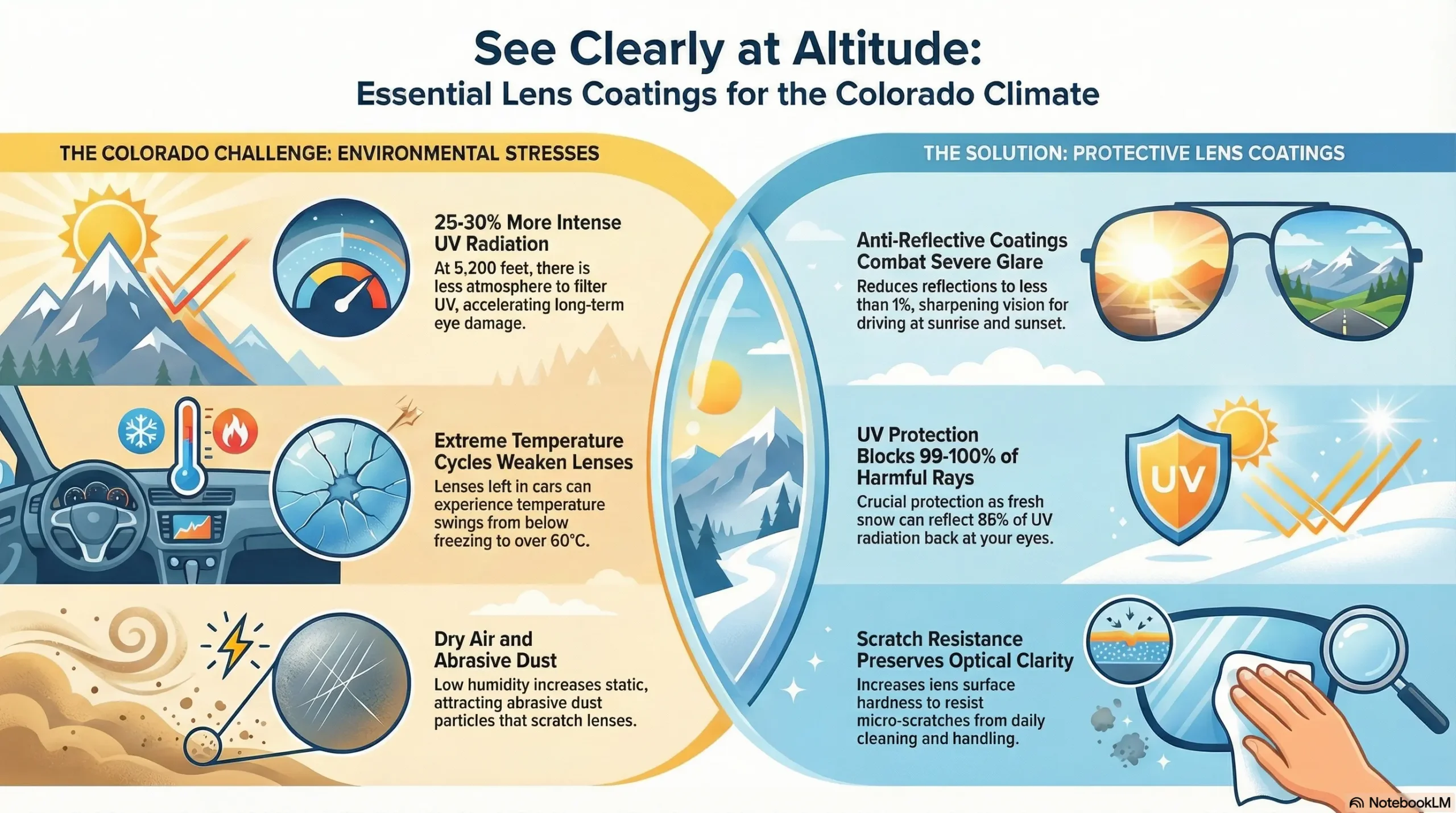
But here’s what hasn’t changed: Fort Collins creates unique challenges for lens coatings. Our 5,200-foot elevation means 25-30% more UV exposure than Denver. The temperature swings from -10°F winter mornings to 95°F summer afternoons, stressing coating materials. And if you spend time outdoors around horses, farms, or construction sites, the dust here is particularly abrasive.
I’ve replaced more coatings damaged by leaving glasses on car dashboards in Fort Collins than from normal wear and tear.
What Other Eye Doctors Won’t Tell You About Coating Costs
Basic anti-reflective coating runs $40-80 in Fort Collins. Premium packages with multiple coatings cost $120-200. The most expensive option isn’t always better—sometimes you’re paying for features you’ll never use.
Most vision insurance covers $120-150 toward lenses every two years. If your prescription is stable and you take decent care of your glasses, standard coatings will last until your next eye exam. Expensive coatings make sense if you’re hard on glasses or have specific needs like extensive computer work or outdoor activities.
The hidden cost is replacement. If coatings fail early due to poor care or environmental damage, you’re looking at $200-300 to replace the lenses entirely. Spending an extra $50 upfront for better coating quality often saves $200 later.
The Fort Collins Difference: Why Location Matters for Lens Protection
Living at 5,200 feet changes everything about UV exposure. The atmosphere filters less radiation, so you get about 40% more UV than someone in Florida. This matters for two reasons: immediate comfort and long-term eye health.
UV protection becomes essential rather than optional. I see more early cataracts in patients who spent decades outdoors without proper UV protection. This includes winter activities—snow reflects up to 85% of UV radiation back at your eyes.
The dry climate also affects coating performance. Humidity below 30% for months at a time can make certain coatings more brittle. I’ve learned to recommend specific coating formulations that handle low humidity better.
Temperature cycling is the other factor. Glasses left in cars experience 60-80°F temperature swings regularly. This expansion and contraction gradually weakens the bond between coating layers and the lens surface.
Fort Collins Lifestyle Coating Guide – Which Coatings Actually Match Your Life
Your daily activities determine which coatings provide real value. A CSU student studying indoors needs different protection than someone hiking Horsetooth Mountain every weekend.
Your Fort Collins Activity Level Determines Your Coating Needs
I evaluate coating needs based on three factors: where you spend time, what you do with your hands, and your budget priorities. Someone who works construction outdoors needs impact resistance and easy cleaning more than blue light filtering. A graphic designer benefits more from anti-reflective and computer-specific coatings.
The key is matching coating performance to actual use patterns. Expensive photochromic lenses make no sense if you spend 90% of your time indoors. Basic scratch resistance might be inadequate if you’re constantly taking glasses on and off for welding or carpentry work.
CSU Students & Budget-Conscious Families
For college students, start with a basic anti-reflective coating ($40-60) and scratch resistance. These address the biggest daily problems: glare from computer screens and scratches from tossing glasses in backpacks.
Blue light filtering adds $30-50 but provides minimal benefit unless you’re experiencing eye strain symptoms. Sleep disruption from evening screen time affects maybe 15% of students significantly enough to justify the cost.
Skip photochromic (transition) lenses for now. They work poorly in cars due to windshield UV filtering, and they don’t get dark enough for the bright Colorado sun. Separate prescription sunglasses provide better protection and only cost $60-100 more.
For families with young children, prioritize scratch resistance and impact protection over cosmetic features. Polycarbonate lenses with basic coatings outlast expensive lenses with premium coatings when kids are involved.
Outdoor Recreation Enthusiasts
If you hike, bike, ski, or climb regularly in Northern Colorado, UV protection becomes non-negotiable. Standard lenses block some UV, but coating that blocks 100% of UV-A and UV-B prevents cumulative damage that shows up decades later.
Photochromic lenses work well for activities with changing light conditions—hiking from forest to exposed ridges, or cycling early morning when light changes rapidly. They’re less effective for snow sports because cold weather slows the transition speed.
For water activities at Horsetooth or Grand Lake, polarized prescription sunglasses reduce glare better than any clear lens coating. But polarized coatings on regular glasses can interfere with LCDs, making them poor choices for people who use phones or GPS devices frequently.
Working Professionals in Fort Collins
Anti-reflective coating improves appearance during video calls and in-person meetings. Without it, people see reflections of lights and screens in your lenses instead of your eyes. This becomes more important as remote work continues.
Computer-specific coatings filter specific wavelengths that can cause eye strain during long screen sessions. They work best for people spending 6+ hours daily on computers. The effect is subtle—reduced end-of-day eye fatigue rather than dramatic immediate relief.
Scratch resistance matters more for people who remove glasses frequently during the day. Accountants, dentists, and anyone switching between reading glasses and regular glasses should invest in harder coatings.
Families with Active Children
Children’s glasses need impact resistance first, scratch resistance second, and UV protection third. Everything else is optional until they’re teenagers and care about appearance.
Polycarbonate lenses with basic coatings cost $80-120 and survive playground activities better than expensive lenses with premium coatings. The child will outgrow the prescription before the coatings wear out.
For teenagers involved in sports, consider separate sports glasses with polycarbonate lenses rather than expensive coatings on regular glasses. A basketball to the face will break any lens, but sports glasses stay on better and cost less to replace.

The Investment Calculator – Real Numbers, No Sales Pressure
Quality lens coatings cost $100-200 upfront but can save $300-500 in replacement costs over three years. The math works if you choose coatings that match your actual usage patterns.
Smart Money Decisions: When Coatings Pay for Themselves
I calculate coating value based on replacement frequency and comfort improvement. If you typically get new glasses every two years and take reasonable care of them, mid-level coatings ($80-120) provide the best value.
Premium coatings ($150-200) make financial sense for people who keep glasses longer, work in harsh environments, or have strong prescriptions where replacement lenses cost $400+. They don’t make sense for people who lose or break glasses regularly.
The break-even point for scratch-resistant coating is about 18 months. Without protection, plastic lenses develop enough scratches to impair vision in 12-18 months with normal use. Scratch-resistant coating extends usable life to 3-4 years.
Fort Collins Coating Prices: What You’ll Actually Pay
At our practice, basic anti-reflective coating costs $45. Premium anti-reflective with scratch resistance runs $85. Full package with UV protection, anti-reflective, scratch resistance, and easy-clean coating costs $140.
Vision insurance typically covers $100-150 toward lenses every 24 months. If your total lens cost, including coatings, exceeds the insurance allowance, you pay the difference. FSA and HSA accounts cover the entire cost, making expensive coatings effectively tax-free.
Chain stores often bundle coatings into package deals that seem cheaper but include features you may not need. Independent practices usually offer more flexibility to customize coating combinations.
The 2-Year Test: Coating ROI Calculator
Over two years, uncoated lenses typically need replacement once due to scratching or UV damage, costing $150-300. Coated lenses usually last the full two years, requiring only routine cleaning and minor adjustments.
Comfort improvements are harder to quantify but significant for many people. Reduced glare strain can prevent headaches worth several hundred dollars in lost productivity and over-the-counter medications. Better night vision from anti-reflective coatings has a safety value that’s difficult to price.
UV protection prevents gradual damage that might require cataract surgery 10-20 years earlier. Cataract surgery costs $3,000-6,000 per eye and involves weeks of recovery. UV protection costs $20-40 and works continuously.
Budget Planning: Essential vs. Nice-to-Have Coatings
Essential coatings for most Fort Collins residents: UV protection ($25), basic anti-reflective ($45), and scratch resistance ($35). Total: $105, covered by most vision insurance.
Nice-to-have upgrades: Premium anti-reflective for better clarity ($40 extra), easy-clean coating for reduced maintenance ($25), blue light filtering for computer work ($35).
Luxury options: Photochromic lenses ($75-125 extra), polarized coatings ($50-85), designer lens treatments ($100+). These provide specific benefits but aren’t necessary for most people.
Coating Science Made Simple – What Actually Works in Colorado Weather
Anti-reflective and UV protection coatings provide measurable benefits in Fort Collins conditions. Scratch resistance extends lens life significantly. Other coatings offer modest improvements for specific situations.
How Colorado’s Environment Affects Your Lens Coatings
High altitude increases UV intensity because there’s less atmosphere to filter radiation. At 5,200 feet, UV exposure is 25-30% higher than at sea level. This acceleration affects both immediate comfort and long-term eye health.
Temperature cycling stresses coating materials. Glasses left in cars experience temperature ranges from below zero to over 140°F. This expansion and contraction gradually weakens the molecular bonds between coating layers and the lens surface, causing premature failure.
Low humidity affects static electricity buildup on lenses, attracting dust more aggressively. Anti-static treatments in coating formulations help reduce this problem, but proper cleaning becomes more important in dry climates.
Anti-Reflective Coatings: The Fort Collins Essential
Standard lenses reflect 6-8% of incoming light. This creates visual noise that reduces contrast and causes glare, especially problematic during bright Colorado days or night driving on I-25.
Anti-reflective coatings reduce surface reflection to less than 1%. This improves contrast sensitivity, making objects appear sharper against bright backgrounds. The effect is most noticeable when driving toward sunrise or sunset, common situations on east-west roads in Fort Collins.
Modern anti-reflective coatings include anti-static and easy-clean layers. These reduce dust accumulation and make cleaning more effective, an important benefit in our dusty climate.
Quality varies significantly between manufacturers. Premium coatings use ion-beam sputtering or similar advanced deposition methods. Budget coatings use older chemical processes that create less durable bonds.
UV Protection: More Critical at 5,000+ Feet
UV radiation damages the lens proteins in your eyes gradually over decades. This cumulative damage contributes to cataracts, macular degeneration, and other conditions that become more common with age.
At Fort Collins’ elevation, UV exposure accumulates faster. Someone spending significant time outdoors without UV protection will experience damage equivalent to 15-20 extra years of sea-level exposure over a lifetime.
UV protection in lens coatings blocks 99-100% of UV-A and UV-B radiation. This protection works regardless of lens tint, unlike sunglasses that might be left at home or in the car.
Winter snow reflection compounds the problem. Fresh snow reflects 85% of UV radiation back toward your eyes, creating exposure from below that sunglasses don’t address well.
Scratch Resistance: Surviving Northern Colorado Life
Plastic lenses without coating have surface hardness similar to fingernails. Normal cleaning and handling create microscopic scratches that accumulate over months, gradually reducing optical clarity.
Scratch-resistant coatings increase surface hardness to approach that of glass. They won’t prevent deep scratches from dropping glasses on concrete, but they eliminate most daily wear patterns.
Agricultural dust in our area contains particularly abrasive silica particles. People working around farms, construction sites, or even gardening in windy conditions benefit more from scratch resistance than those in urban environments.
The coating must be applied during lens manufacturing. Scratch-resistant films added later don’t bond properly and usually fail within months.
Coating Failure Prevention – Protecting Your Investment
Proper care extends coating life from 18 months to 4+ years in Fort Collins conditions. Most coating failures result from preventable damage rather than normal wear.
Why Coatings Fail and How to Prevent Problems
Heat damage causes 40% of premature coating failures, I see. Temperatures above 140°F break down the molecular bonds in coating materials. Car dashboards regularly reach 160-180°F in summer, and leaving glasses there for even 30 minutes can cause permanent damage.
Chemical damage comes from improper cleaning. Household cleaners, especially ammonia-based products, dissolve coating materials. Alcohol-based cleaners are safer but still harsh with daily use. Paper towels and tissues contain wood fibers that scratch coatings.
Mechanical damage results from poor handling habits. Putting glasses face down on surfaces, cleaning in circular motions, and using dirty cloths create scratches that accumulate over time.
Static electricity in dry climates attracts dust more aggressively. Dirty lenses require more frequent cleaning, increasing wear on coatings. Anti-static treatments help, but proper storage and gentle cleaning remain essential.
The Colorado Care Protocol
Use microfiber cleaning cloths exclusively. Rinse lenses with lukewarm water before wiping to remove abrasive particles. Clean the microfiber cloth weekly in regular laundry—dirty cloths scratch more than they clean.
Store glasses in hard cases when not wearing them. Soft pouches don’t prevent pressure damage in purses or backpacks. Hard cases cost $10-20 and prevent most accidental damage.
Avoid temperature extremes. Never leave glasses in cars during summer or winter. The temperature cycling weakens coating bonds even if immediate damage isn’t visible.
Clean weekly with lens-specific solutions rather than daily with whatever’s available. Proper cleaning solutions cost $5-8 and last for months. They’re formulated to dissolve oils and residues without affecting coating materials.
Warranty Protection Strategies
Most coating warranties require specific care practices. Using non-recommended cleaning products, exposing lenses to excessive heat, or allowing deep scratches voids coverage. Document your care routine if you plan to make warranty claims.
Warranties typically cover manufacturing defects rather than damage from use. Premature crazing, delamination, or color changes within the first year usually qualify. Scratches from normal handling generally don’t.
Take photos of new lenses to document the initial condition. Coating problems sometimes develop gradually, and having baseline documentation helps with warranty claims.
Replace cleaning cloths every 3-4 months. Old clothes accumulate embedded particles that scratch coatings regardless of how carefully you clean them.
Poudre Valley’s Coating Success Program
We provide detailed care instructions with every coating purchase and follow up at 6-month intervals to check coating condition. Early identification of problems allows for warranty claims or preventive measures.
Our success rate exceeds 90% for coatings lasting the full warranty period when patients follow recommended care protocols. This includes replacing cleaning supplies, avoiding temperature extremes, and using proper storage.
We stock replacement cleaning supplies and provide them at cost to ensure patients have access to proper maintenance materials. Many coating failures result from using whatever cleaning products are convenient rather than appropriate ones.
Common Coating Mistakes Fort Collins Residents Make
Most coating problems I see result from three mistakes: choosing based on price alone, ignoring care requirements, and mismatching coatings to lifestyle needs.
Coating Pitfalls We See Every Day in Our Fort Collins Practice
The biggest mistake is assuming expensive coatings are automatically better. A patient spent $300 on premium photochromic lenses for office work, then complained they never darkened indoors. Photochromic lenses need UV light to activate, which doesn’t penetrate office windows.
Another common problem is overcoating. A contractor ordered every available coating on safety glasses, creating thick lens buildup that interfered with his work helmet. He would have been better with basic impact resistance and easy cleaning.
Price-shopping often backfires because cheap coatings fail faster, requiring complete lens replacement. A patient saved $60 on a budget coating that started peeling after eight months. The replacement cost $240—four times the initial savings.
Car storage damage accounts for 30% of coating warranty claims. Patients understand extreme heat is bad, but don’t realize that even moderate temperatures (80-90°F) in closed cars create damaging conditions over time.
The “Cheap Coating” Trap
Budget coatings use older chemical deposition processes that create less durable molecular bonds. They may look identical to premium coatings initially, but break down faster under stress.
The cost difference between basic and quality coatings is usually $40-60. Over a two-year lens lifecycle, this amounts to $1.50-2.50 per month. Most people spend more than that on coffee weekly, but skimp on the coatings they use for 16 hours daily.
Cheap coatings often lack subsidiary layers like anti-static or easy-clean treatments. These features significantly improve daily usability, making the small extra cost worthwhile for most people.
Chain stores sometimes offer “free” coatings that are actually low-grade versions included in inflated lens prices. Independent practices usually offer better transparency about coating quality levels.
Over-Coating: When More Isn’t Better
Coating thickness affects optical performance. Too many layers can create subtle distortions or color shifts, especially with strong prescriptions. Three to four coating layers provide optimal performance for most applications.
Photochromic coatings don’t combine well with polarization. The technologies interfere with each other, reducing the effectiveness of both. Separate glasses work better for situations requiring both features.
Blue light filtering combined with anti-reflective coating can create yellowish tints that affect color perception. This matters for people doing color-critical work like graphic design, printing, or electrical work where wire colors matter.
Some premium coatings require specific care products that cost more and aren’t always available. If you’re not willing to maintain expensive coatings properly, simpler options provide better long-term value.
Maintenance Mistakes That Void Warranties
Using paper products to clean lens scratches and coatings immediately. Paper towels, tissues, and napkins contain wood fibers that act like fine sandpaper on coating surfaces.
Household cleaners dissolve coating materials. Windex, Simple Green, and similar products contain ammonia or other chemicals that break down coating bonds. Even “gentle” cleaners often contain detergents that affect coatings.
Hot water warps plastic lenses and can cause coating delamination. Water above 100°F damages most coating materials. Use lukewarm water for rinsing.
Circular cleaning motions concentrate pressure and create visible scratch patterns. Clean in straight lines from one side to the other, using minimal pressure with proper cleaning cloths.
Local Resources & Citations
Colorado State University Environmental Health Services
CSU’s occupational health program provides workplace eye protection standards and safety guidelines that apply to laboratory and field work requiring specific lens coatings and impact resistance requirements.
Colorado Department of Health Care Policy & Financing Vision Guidelines
State health department resources explain vision care benefits, eye protection requirements, and Medicaid coverage for eye care services, including protective eyewear for various conditions.
Colorado Department of Public Health & Environment
State health department provides accessibility resources for vision-impaired residents and guidelines for digital accessibility, including assistive technologies for low-vision individuals.
National Weather Service Boulder Forecast Office
NWS Boulder office provides altitude-specific weather data, including UV index forecasts, temperature ranges, and atmospheric conditions affecting lens coating performance and eye protection needs in Northern Colorado.
Your Next Steps – Making the Right Coating Decision for Fort Collins Life
Schedule a coating consultation to evaluate your specific needs and lifestyle factors. Proper coating selection requires understanding your daily activities, budget priorities, and environmental exposures.
The Poudre Valley Coating Consultation Process
During your appointment, we evaluate three factors: how you use your glasses, your work and recreation environments, and your budget constraints. This takes 10-15 minutes and helps identify the coating combination that provides the best value for your situation.
We demonstrate coating differences using sample lenses so you can see actual performance rather than relying on descriptions. The visual difference between coated and uncoated lenses in various lighting conditions helps clarify which features matter for your daily activities.
No pressure to decide immediately. Complex coating packages are significant investments, and we encourage people to consider options carefully. We provide written recommendations with pricing so you can compare options at home.
Follow-up care is included with coating purchases. We check coating condition at 6-month intervals and provide replacement cleaning supplies to ensure optimal performance throughout the warranty period.
Questions to Ask Any Eye Care Provider About Coatings
- What specific coating brand and grade do you recommend, and why?
Generic answers suggest limited knowledge about coating technologies and performance differences. - How do local environmental conditions affect coating selection?
Providers familiar with Fort Collins should understand altitude UV concerns, temperature cycling effects, and dust issues. - What care products and procedures do you recommend?
Detailed care instructions indicate experience with coating longevity and common failure modes. - What does your coating warranty cover, and what voids it?
Clear warranty terms protect your investment and indicate confidence in coating quality. - How do you handle coating problems if they occur?
Responsive customer service becomes important when expensive coatings fail prematurely.
Ready to Invest in Your Vision?
Bring your current glasses to compare coating condition and discuss performance. We can identify wear patterns and coating problems that might influence your next purchase.
Insurance and FSA information helps optimize coverage for coating costs. Some insurance plans have preferred coating brands or specific coverage limitations.
List your daily activities and visual requirements. Computer work, outdoor recreation, driving patterns, and hobbies all influence optimal coating selection.
Consider timing for lens purchases. New coatings work best on new lenses, so coordinate coating decisions with prescription updates when possible.
Special Considerations for Fort Collins Families
Children’s coating needs to focus on protection rather than optical performance. Impact resistance and easy cleaning matter more than premium clarity features until kids reach high school.
Family coating packages can reduce per-person costs while ensuring everyone gets appropriate protection. We offer volume discounts for multiple family members getting coatings simultaneously.
School schedules affect optimal timing for children’s glasses. Summer purchases allow adjustment time before school starts, and backup glasses prevent problems if primary glasses break during the school year.
Sports participation requires specific coating considerations. Contact sports need impact protection, outdoor sports need UV protection, and indoor activities benefit from anti-reflective coatings.
Frequently Asked Questions
-
Basic anti-reflective coating costs $40-80, while premium coating packages range $120-200. Most vision insurance covers $100-150 toward lenses every two years, making basic coatings essentially free. Complex coating combinations may exceed insurance allowances, requiring out-of-pocket payment for upgrades.
Please note: None of the above should be considered medical advice. If you’re having any concerns about your vision, please reach out to us immediately or see your primary care provider.