My Child Says They Can’t See the Board — Do They Need Glasses?
If your child says they can’t see the board at school, they may have myopia (nearsightedness) — the most common vision problem in school-age children. Key signs include squinting, frequent headaches, and sitting too close to the TV. A comprehensive pediatric eye exam is the only way to know for certain and is the essential first step.
It starts with a small comment at the dinner table. “Mom, I can’t really see what the teacher writes on the board.” Or maybe their teacher sends home a note. Maybe you notice them squinting at the TV from across the room, or they mention headaches after school more than seems normal. Whatever the moment, that comment stops you — and suddenly you are wondering how long this has been going on and what it means for your child.
First, take a breath. You are not behind, and your child is not in crisis. What you are experiencing is one of the most common parenting moments we see at Poudre Valley Eyecare — and it is exactly the kind of concern we are here to help you navigate. As a family-run optometry practice that has served Fort Collins families for over 30 years, we know that behind every parent’s question is a genuine desire to do right by their child. This guide is written to give you the clear, honest answers you deserve.
Why Children Often Can’t See the Board — And Why It Matters More Than You Think
When a child struggles to see the board at school, the most likely explanation is myopia, commonly known as nearsightedness. Myopia is a refractive error — a mismatch between the length of the eye and its focusing power — that makes distant objects appear blurry while close objects remain clear. It is not a disease, and it is not your fault. It is, however, something that requires attention, because a child who cannot see clearly is a child who is quietly struggling in ways that may not yet be visible to you.
The Rise of Myopia in School-Age Children
Myopia is not just common — it is becoming more prevalent with each generation. Research from the American Optometric Association indicates that myopia in children has increased significantly over recent decades, with leading contributing factors including increased screen time and reduced time spent outdoors in natural light. In practical terms, this means that more Fort Collins children than ever are sitting in classrooms unable to read the board clearly — often without realizing that what they experience is not normal. For many children, blurry distance vision is simply the only reality they have ever known.
How Undetected Vision Problems Affect Learning
The connection between clear vision and academic performance is direct and well-documented. Children who cannot see the board clearly often fall behind not because of a learning difficulty, but because they are missing the foundational visual information their education depends on. They may lose confidence, disengage from classroom participation, or be incorrectly assessed as having attention or behavioral issues. In fact, it is estimated that roughly 80% of learning in a classroom is visual. When that channel is compromised, everything downstream is affected — grades, confidence, and a child’s relationship with learning itself.
📅 Is your child struggling in school or mentioning trouble seeing? A comprehensive pediatric eye exam is the clearest next step. Call Poudre Valley Eyecare at (970) 493-6360 or visit us at 1820 S College Ave, Suite B, Fort Collins, CO 80525. Our focus is you — and your family.
7 Signs Your Child May Need Glasses (Fort Collins Parents, Watch for These)
Children are remarkably adaptable. They often do not complain about vision problems because they genuinely do not know that what they are seeing is different from what everyone else sees. That is why parents and teachers are often the first to notice the behavioral signals that point to a vision problem. Here are the seven most important signs to watch for.
1. Squinting to See the Board or Screen
Squinting is one of the most instinctive responses to blurry vision. By narrowing the eyelids, the eye temporarily improves its ability to focus — giving the brain a slightly clearer image. If you notice your child squinting at the whiteboard, the television, or anything at a distance, their eyes are telling you something important. This is not a habit or a quirk. It is a compensatory response to a vision problem that deserves a professional evaluation.
2. Frequent Headaches — Especially After School
When a child with uncorrected myopia strains to focus on distant objects throughout the school day, the muscles inside the eye are working far harder than they should. This sustained effort frequently results in tension headaches — typically felt behind the eyes or across the forehead — that appear in the afternoon or after periods of concentrated visual effort. If your child regularly complains of headaches after school and you cannot identify another cause, their eyes are a logical and important place to start.
3. Sitting Unusually Close to the TV or Holding Books Too Near
This is one of the most recognizable signs of nearsightedness and one that parents often notice first at home. A child with myopia instinctively moves closer to whatever they are trying to see because distance reduces their visual clarity. If your child has claimed the front-row spot on the living room floor or holds their tablet inches from their face, their behavior is a direct response to blurry distance vision.
4. Losing Their Place While Reading or Avoiding Reading Altogether
While myopia primarily affects distance vision, some children experience related visual processing challenges that make sustained reading uncomfortable. A child who frequently loses their place on a page, uses their finger to track every line, or has developed a quiet resistance to reading may be experiencing visual fatigue or a related binocular vision issue. Vision problems and reading difficulties are closely intertwined and often misattributed to learning challenges when the root cause is optical.
5. Rubbing Their Eyes Excessively
Occasional eye rubbing is normal. Frequent, habitual eye rubbing — particularly after school or during activities requiring sustained focus — can signal eye strain, fatigue, or irritation caused by the effort of trying to compensate for poor visual acuity. It is worth noting that excessive rubbing can also be associated with allergies or dry eye, which is why a comprehensive exam rather than self-diagnosis is always the right approach.
6. Tilting Their Head or Covering One Eye
If your child tilts their head to one side, covers one eye while watching television, or consistently turns their face at an angle to look at something, they may be trying to compensate for a significant difference in vision between their two eyes — a condition called anisometropia — or an alignment issue such as amblyopia (lazy eye). These conditions require prompt professional evaluation, as early intervention produces significantly better outcomes than delayed treatment.
7. A Teacher or School Nurse Has Raised a Concern
School vision screenings are not a substitute for a comprehensive eye exam — they test a narrow range of visual functions and miss a large percentage of clinically significant vision problems. However, when a teacher or school nurse expresses concern about your child’s vision or attention, it is a signal that should be taken seriously and followed up with a full professional evaluation without delay.
If your child is showing even one or two of these signs, a professional evaluation is the only way to know for certain what is happening — and more importantly, what to do about it.

What to Expect at Your Child’s Eye Exam at Poudre Valley Eyecare
One of the most common reasons parents delay scheduling an eye exam for their child is uncertainty about what the visit actually involves. Will my child be able to cooperate? Will they need to read letters? What if they are too young to answer the questions? These are completely valid concerns — and they are concerns we address every single day at our practice. Understanding what a pediatric eye exam looks like can make the decision to book significantly easier.
A Welcoming Environment Built for Patients of All Ages
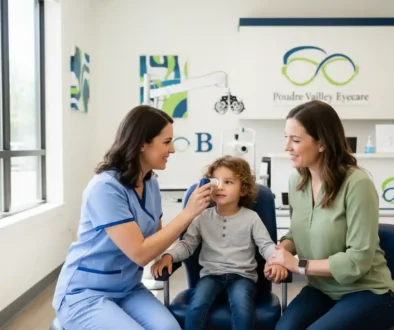
Poudre Valley Eyecare is a family-run practice in the truest sense of the term. We have been caring for Fort Collins families — grandparents, parents, and children alike — for over 30 years. Our office is designed to feel approachable and comfortable for patients of every age, and our team is experienced in making even the most anxious young patients feel at ease from the moment they walk through the door. This is not a retail environment. There is no pressure, no rushing, and no transaction mentality. Our focus is genuinely and entirely on your child’s health.
What the Exam Actually Involves
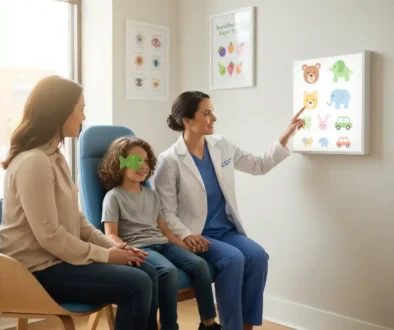
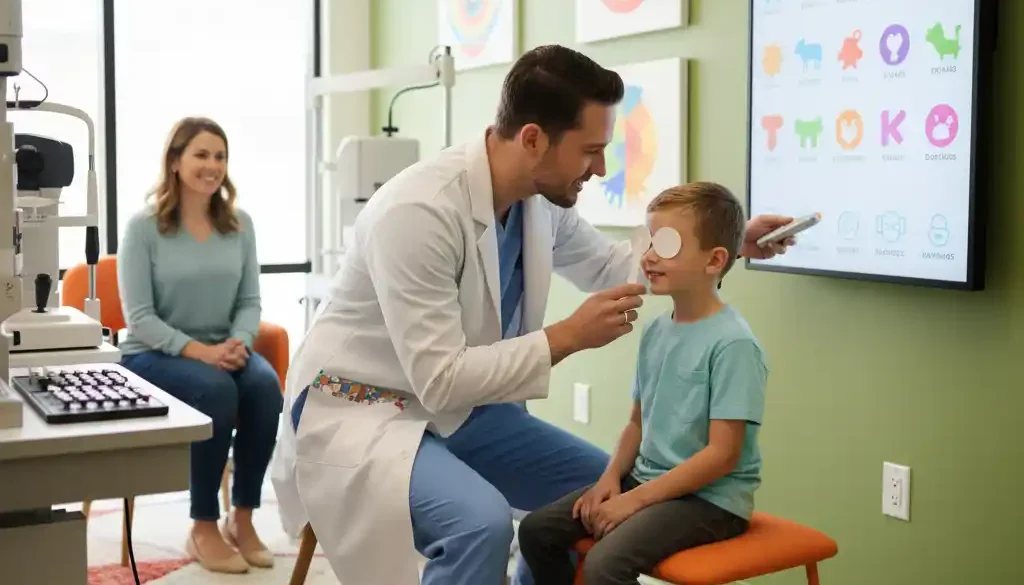
A comprehensive pediatric eye exam at Poudre Valley Eyecare evaluates far more than whether your child can read the letters on a chart. The exam assesses:
- Visual acuity — how clearly your child sees at distance and near
- Refractive error — whether myopia, hyperopia (farsightedness), or astigmatism is present
- Binocular vision — how well the eyes work together as a coordinated team
- Eye health and disease screening — the internal and external health of the eye structures
For retinal health evaluation, we utilize the advanced Optos Optomap technology, which captures an ultra-widefield image of the retina without the discomfort of dilation in many cases. This technology allows our doctors to detect early signs of eye disease and evaluate your child’s overall ocular health with exceptional precision — providing you with peace of mind that goes well beyond a standard vision screening.
How We Communicate Results to You and Your Child
At the conclusion of the exam, our doctors will walk you through every finding in clear, straightforward language — no confusing medical jargon, no vague reassurances. If your child needs corrective lenses, we will explain exactly why, what the prescription means, and what you can expect. If we recommend monitoring rather than immediate treatment, we will explain that too. You will leave our office with a complete understanding of your child’s vision health and a clear, personalized plan for next steps. That is the standard of care we hold ourselves to — and the standard Fort Collins families have trusted for three decades.
📞 Ready to get your child’s vision checked by Fort Collins’ trusted family eye care team? Book your child’s comprehensive eye exam today. Call Poudre Valley Eyecare at (970) 493-6360 or visit us at 1820 S College Ave, Suite B, Fort Collins, CO 80525.
What Happens If My Child Does Need Glasses?
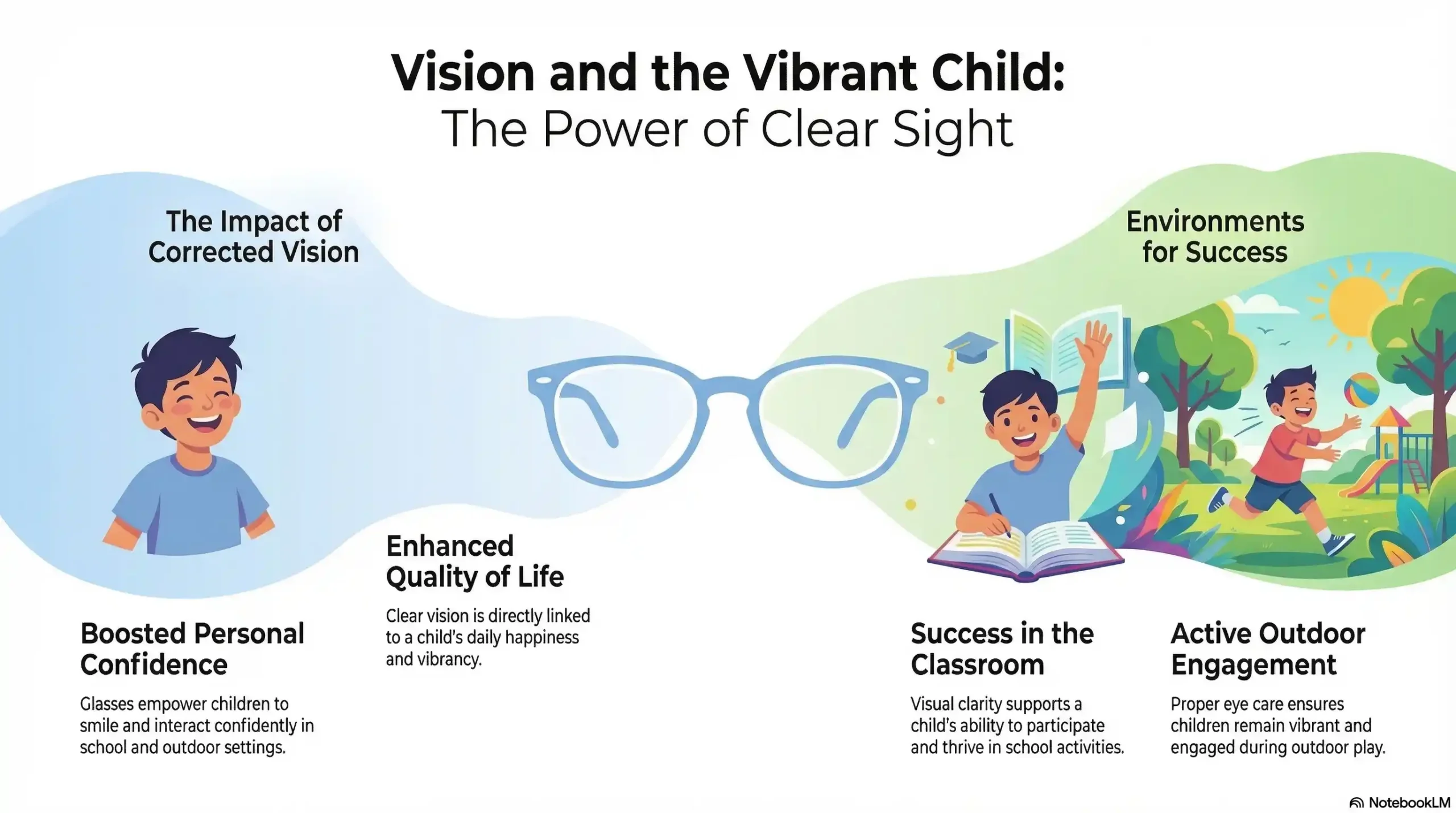
Learning that your child needs glasses can bring up a surprising range of emotions — concern, guilt, and uncertainty about what comes next. It is worth saying clearly: needing glasses is not a sign that anything went wrong. It simply means your child’s eyes have a refractive error that can be corrected, and in most cases, the change that glasses bring to a child’s daily experience is immediate and profound. Children who previously struggled to see the board often describe putting on their first pair of glasses as a revelation — suddenly, the world has edges again.
Prescription Glasses — What the Process Looks Like
Once the exam is complete and a refractive error is confirmed, our doctors will provide a precise prescription tailored to your child’s specific visual needs. Because Poudre Valley Eyecare focuses exclusively on medical eye care — not retail optical sales — our prescription recommendations are driven entirely by your child’s clinical needs, with no retail pressure attached. Your prescription is yours to use however best serves your family, including at the neighboring Eyemart for convenient frame selection if you choose.
The adjustment period for new glasses is typically brief. Most children adapt within a few days, and many notice improved comfort and clarity almost immediately. Our team will guide proper wear schedules and follow-up care to ensure the prescription is performing as expected.
Will My Child’s Vision Get Worse Over Time?
This is one of the questions we hear most often from parents, and it deserves an honest answer. Myopia in children can progress — meaning the prescription may need to be updated — particularly during periods of rapid growth. This is why annual eye exams are not just a formality but a genuinely important part of managing your child’s long-term visual health. Our doctors will monitor your child’s prescription at each visit and discuss any changes openly, so you are never caught off guard and always have a clear picture of where things stand.
When Should My Child Have Their First Eye Exam? (And How Often After That?)
Many parents assume that a school vision screening is sufficient to monitor their child’s eye health. In reality, school screenings test only basic distance visual acuity using a standard letter chart and miss a wide range of clinically significant conditions, including amblyopia, binocular vision disorders, and early refractive errors. The American Optometric Association recommends a structured schedule of professional eye exams beginning in infancy — long before a child ever sits in a classroom.
The Recommended Eye Exam Schedule for Children
| Age | Recommended Exam |
|---|---|
| 6 Months | First comprehensive infant eye exam |
| 3 Years | Pre-school vision and eye health evaluation |
| Before Kindergarten | Full exam before starting school |
| Ages 6–18 | Annual comprehensive eye exam |
This schedule exists because vision develops rapidly in early childhood, and many conditions — including amblyopia — are significantly more treatable when identified early. A child who misses their early exams may reach school age with a preventable vision problem that has already begun to affect their development.
Why Annual Exams Matter — Even If Your Child Hasn’t Complained
Children are extraordinarily adaptive. A child who has always seen the world in a certain way has no reference point for what “normal” vision feels like. They will not necessarily complain about blurry vision because, to them, blurry is simply the way the world looks. This is precisely why relying on a child to self-report a vision problem is an incomplete strategy. Annual professional exams ensure that any changes in your child’s vision are caught and addressed proactively — before they have a chance to affect learning, confidence, or long-term eye health.
Local Resources for Fort Collins Families
The following authoritative resources can help Fort Collins parents learn more about children’s vision health, school screening requirements, and eye care support in our community.
- Colorado Department of Education — Vision Screening Guidelines (K–12): Review the official state guidelines that govern how and when your child’s vision is screened at school in Colorado, so you understand exactly what a school screening does — and does not — check for.
- Poudre School District — Vision & Hearing Screenings: Learn which grades PSD conducts vision screenings in and what happens after your child’s screening, including how parents are notified and the referral process if a concern is identified.
- American Optometric Association — Children’s Vision: Access the AOA’s official evidence-based guidelines on comprehensive pediatric eye exams, recommended exam schedules by age, and educational resources on myopia and children’s visual development.
- Larimer County Department of Health and Environment: Find local public health resources and family wellness programs available to Larimer County residents, including information on Medicaid and CHP+ coverage that may help offset the cost of your child’s eye exam.
Poudre Valley Eyecare — Fort Collins’ Trusted Family Eye Care for Over 30 Years
At Poudre Valley Eyecare, pediatric eye care is not an afterthought — it is a foundational part of who we are and what we do. As a family-run practice with more than 30 years of history in the Fort Collins community, we have had the privilege of caring for generations of Northern Colorado families. We have examined children who now bring their own children to see us — and that continuity of care is something we do not take lightly.
Our practice is built on a simple but powerful philosophy: Our Focus is You. That means every exam, every conversation, and every recommendation is centered entirely on your child’s health and your family’s peace of mind — never on retail sales or unnecessary upselling. We are proud members of the American Optometric Association and the Colorado Optometric Association, and we hold ourselves to the highest clinical and ethical standards in everything we do.
We proudly serve families throughout Fort Collins, Loveland, Wellington, Timnath, and Greeley, and we accept most major insurance plans, including Medicare and Medicaid, to ensure that comprehensive eye care is accessible to every family in our community.
🌟 Your child’s vision shapes everything — how they learn, play, and experience the world. Don’t wait for the next report card to find out. Schedule a comprehensive pediatric eye exam with Poudre Valley Eyecare today. We proudly serve families across Fort Collins, Loveland, Wellington, Timnath, and Greeley.
📞 Call us at (970) 493-6360 📍 Visit us at 1820 S College Ave, Suite B, Fort Collins, CO 80525
Our Focus is You.
Frequently Asked Questions
-
This indicates myopia (nearsightedness). Their eyes struggle to focus on distant objects like classroom boards, but near-vision tasks like reading books or using tablets remain perfectly clear